Face Value & Troy Ounces
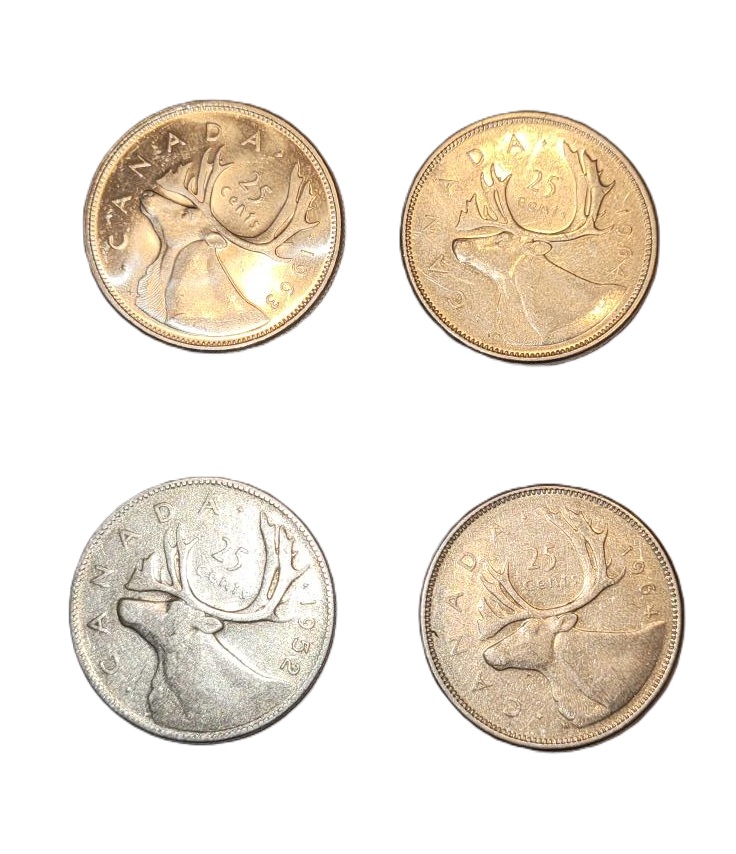
Canadian silver coins have a face value (e.g., 25 cents, $1) but their actual worth (melt/bullion value) is much higher due to precious metal content, typically 80% silver for 1920-1966 coins, which contain about 0.6 troy oz of silver per dollar of face value, while older (pre-1920) coins are 92.5% silver, and 1967/1968 coins have varying purity, with later coins post 1968 having no silver at all. 1 troy ounce of 80% silver is $1.67 face.
Key Periods & Silver Content
Before 1920: 92.5% Silver (Sterling).
1920-1966: 80% Silver (Commonly called “junk silver”).
1967: 50% Silver (Dimes/Quarters), 80% (Half Dollars/Dollars).
1968: 50% Silver (Dimes/Quarters), None (Half Dollars/Dollars).
1969 & Later: No silver in circulated coins
Face Value vs. Melt Value
Face Value: What the coin says it is (e.g., a quarter is 25 cents).
Melt Value: The market price of the silver content, determined by the current spot price of silver.
Numismatic Value: Added collectible value due to rarity, condition, or historical significance (e.g., certain rare years like 1947/48).
Does my Canadian coin have silver?
Year: If it’s a dime, quarter, half-dollar, or dollar from before 1968, it likely is made mostly out of silver.
Magnet Test (for 1968): Silver coins aren’t magnetic; if a 1968 coin sticks to a magnet, it has no silver.
See Silver Coin Determination for tests of silver in a coin.
Value Comparison
For most 1920-1966 coins, the melt value is significantly higher than the face value, often sold in bags by their $1 face value (containing ~0.6 oz of silver).
A Canadian Silver Dollar (1935-1967) contains 0.6 troy ounces of pure silver, making its melt value far exceed its $1 face value. Note: there may be some wear and loss in weight associated with circulated currency. For silver coin price calculator go here.
“Any combination of change making a dollar face for 1920-1966 Canadian Coins contains about 0.6 troy ounces silver. ”