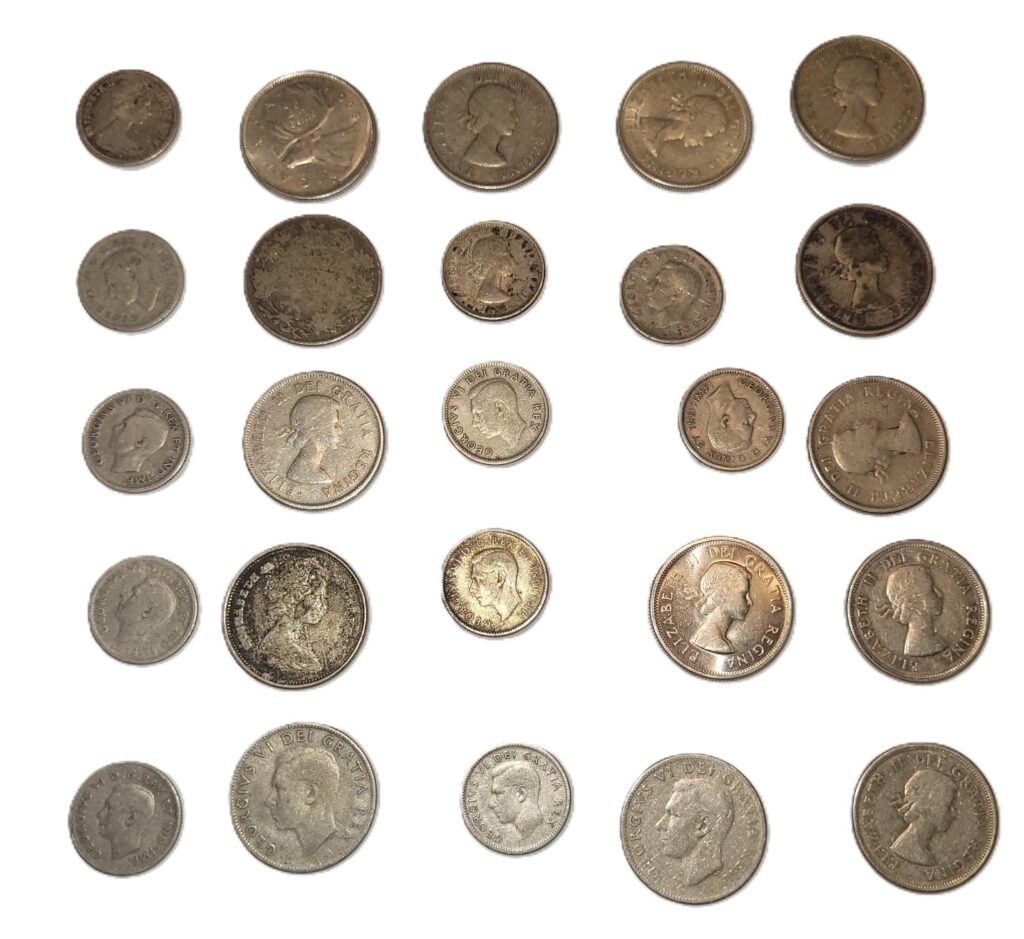
To determine if silver coins are real or fake, you can perform several non-destructive tests . The four most common methods are: the magnet test, the ping (sound) test, the weight and dimension check, and the ice test. Note that Canadian small denomination silver coins are rarely faked due to familiarity by Canadians with size and shape. Bullion due to its greater value and lower familiarity is faked more often, and anyone purchasing should be extremely careful.
- The Magnet Test
Real silver is not magnetic, Use a strong neodymium magnet to test.
Expected result: When you place the coin near the magnet it should not stick. If the magnet sticks to the coins, the coin is not silver and made from ferrous metals. - The Ping (Sound) Test
Genuine silver produces a distinct, high-pitched tingy sound, and has sustained ringing sound when struck, while fake or plated coins will produce a dull, short “thud”.
How to do it: Balance the coin gently on your fingertip or a pencil eraser. Tap the edge with another coin or a metal object. Additionally this can be tested via dropping coins on a hard surface.
Expected result: Listen for a clear, resonant “ping” sound. This test works best for round, thin coins. - The Weight and Dimension Check
The Royal Canadian Mint follows strict specifications for their coins. Irregularities in weight or size can indicate a counterfeit. See this page for expected weight.
How to do it: Use a precise scale to measure the coin’s weight. Compare the coin with known good coins for dimensions. (A vernier caliper may be used for coin dimensions if available.). Note that worn coins will weigh less and may be slightly thinner.
Expected result: The measurements should match the official specifications closely, taking into account wear. - The Ice Test
Silver is the metal with the highest thermal conductivity.
How to do it: Place an ice cube directly onto the silver coin and another ice cube on a non-silver coin of similar dimensions for comparison.
Expected result: The ice cube on the real silver will melt noticeably faster, as if a hot surface were underneath it, even if the coin is at room temperature.
The above tests provide a good assessment, but for complete certainty, professional verification using methods like XRF analyzers or electrical conductivity testers are recommended. Especially when buying large quantities of coin silver from a single source.