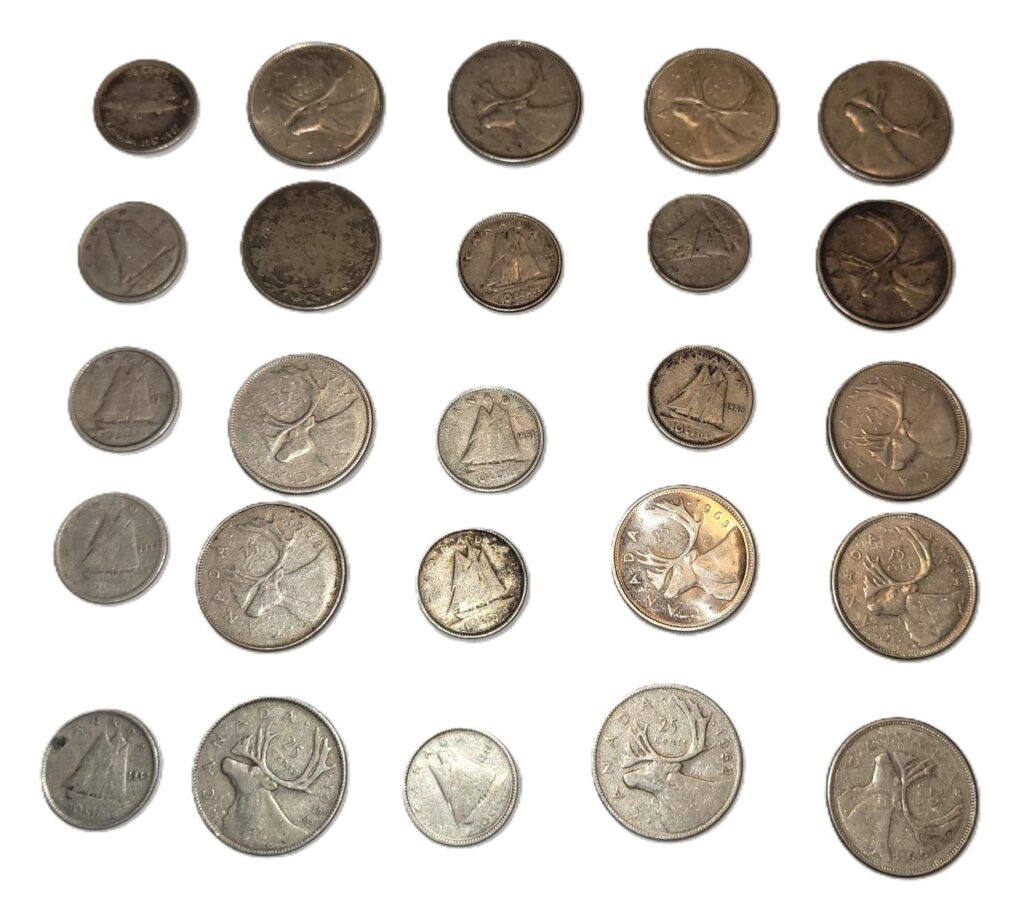
Amassing circulated Canadian silver coins (92.5%, 80%, 50%) offers affordability while bullion provides higher purity (99.9%) and larger volumes.
Coin Silver (aka scrape or junk silver)
Pros: Available under spot price, affordable entry point, small denominations, historical value, easily identifiable, easy to sell, difficult to fake due to familiarity.
Cons: Slightly lower purity. Not for high volume institutional investors.
Best For: individual investors.
Silver Bullion (Bars, Rounds, Investment Coins)
Pros: Higher purity, easier to store large quantities, and generally preferred for large investments.
Cons: Higher spot prices than junk silver, easier to fake (less familiarity with different bars, rounds and coins) Bars are not legal tender.
Best For: Institutions, large investments, and maximizing silver volume.
Note: Paper silver (ETFs, futures) trade on financial markets, often detached from physical supply/demand, with huge leverage (hundreds of paper ounces for one physical), while physical silver (bullion, coins) commands a premium above the spot price due to tangible scarcity, leading to major price divergence, especially when physical shortages arise, as seen in 2025’s massive price rally driven by real-world demand vs. leveraged paper contracts. The paper market can influence prices, but physical scarcity drives real value and premiums, causing a significant gap.
Which to Choose?
For affordability & incremental stacking: coin silver.
For large amounts of silver: Bullion.